New Podcast
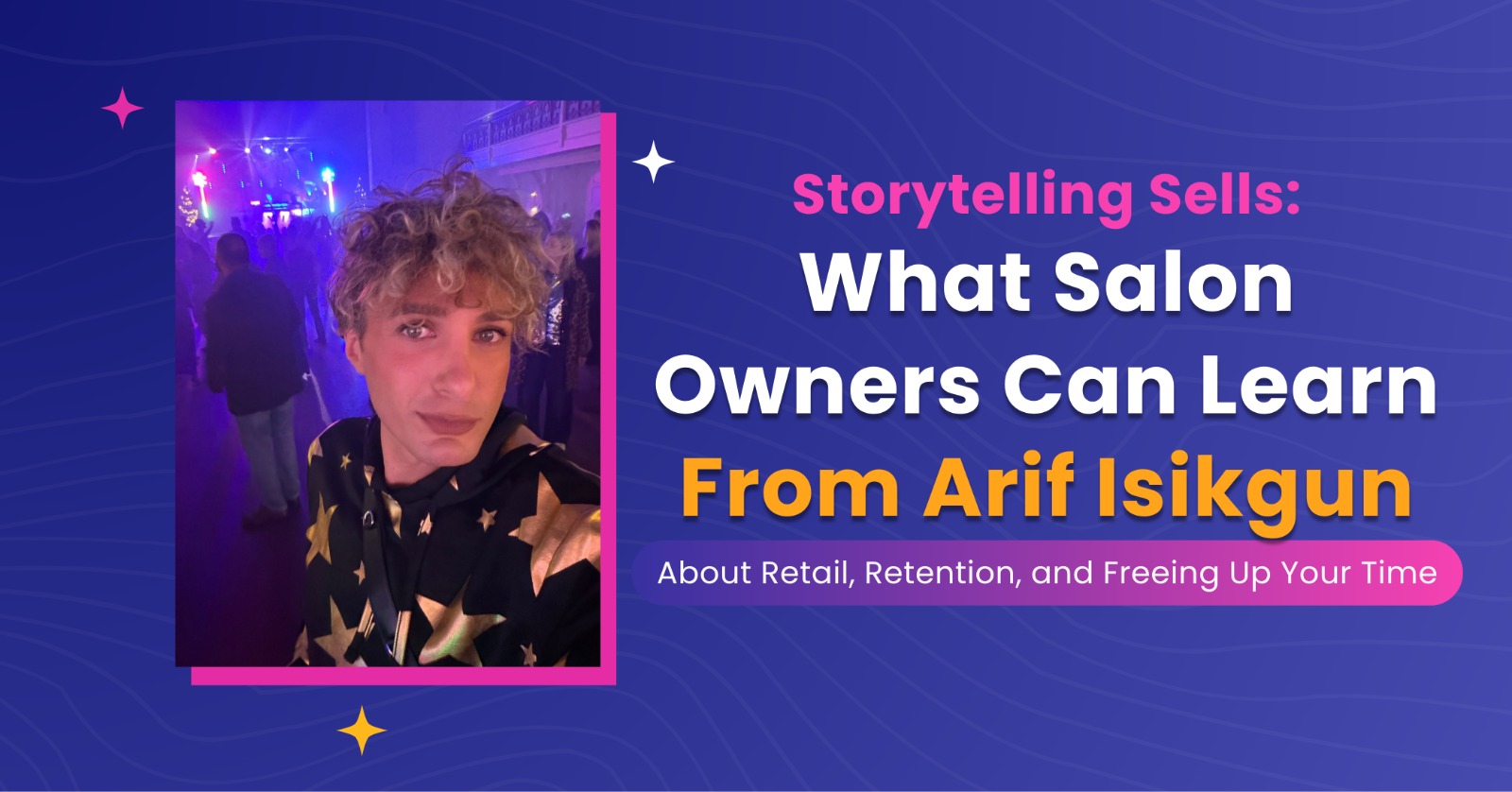
Storytelling Sells: What Salon Owners Can Learn From Arif Isikgun About Retail, Retention, and Freeing Up Your Time

If you own a salon, you already know the hard part isn't creating great hair. It's everything else, the retail sales that never quite hit target, the marketing that falls off when things get busy, and the operations work that…
If you own a salon, you already know the hard part isn’t creating great hair. It’s everything else, the retail sales that never quite hit target, the marketing that falls off when things get busy, and the operations work that eats the hours you meant to spend coaching your team.
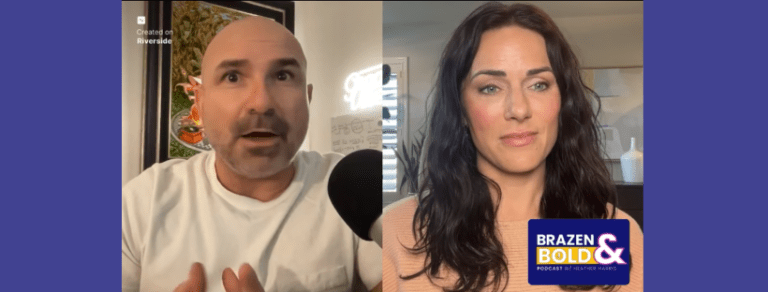
On a recent episode of the Brazen & Bold Podcast, Spark Pro Global co,hosts Heather Harris and Lucy sat down with Arif Isikgun, founder of Ai Beauty Consultancy and co,author of the Amazon bestseller StorySeller, to talk about the one skill most salons are leaving on the table: storytelling.
Here’s what salon owners, managers, and their teams can take away from the conversation, and how the right salon operations support, including a salon virtual assistant, makes it possible to actually put this into practice.
The Math Salon Owners Are Missing on Retail
Arif opened with a number that’s hard to ignore: a salon with an average of seven stylists could add roughly $90,000 a year in additional revenue if each stylist sold just one $50 product a day. No new clients, no new services, no extra chairs, just consistent retail conversations that are already happening, just not being closed.
Arif’s point wasn’t about pushing product harder. It was about mindset. Many stylists are naturals at building rapport and terrible at closing the loop, mentioning a service upgrade or product recommendation almost as an afterthought instead of as a natural part of the consultation. Retail, done well, isn’t a sales pitch, it’s an extension of client care, giving guests a way to maintain the results they just paid for.
Why Stories Outperform Facts in the Salon Chair
One of the most useful frameworks from the conversation: people remember stories roughly 22 times better than they remember facts alone. That has real implications for salon operations — how consultations are structured, how retail is introduced, and how a team talks about products and services day to day.
Instead of reciting ingredients or technical details, Arif’s approach is to bring the conversation back to how a client will feel, with their hair, their confidence, their routine, and to do it early, ideally during the consultation rather than tacked on at checkout. Salons that shift retail conversations into the consultation, rather than the end of the appointment, tend to see meaningful lifts in retail sales, and salons that lean fully into a storytelling,driven training approach have reported retail growth well over 100% after a concentrated training push.
The line Arif’s own brand is built on sums it up well: “facts tell, but stories sell.”
Emotional Connection Is the Differentiator — For Clients and Teams
With so many salons offering similar services at similar price points, Arif’s take is that emotional connection is what actually differentiates a salon business, not the location, not the treatment menu. Clients who feel genuinely invested in a brand or a stylist relationship tend to spend significantly more over their lifetime with that salon, and the same principle applies inside a team: stylists who feel connected to a shared culture and a clear “why” show up differently than stylists who are just filling appointment slots.
That’s also where consistency matters. A salon can (and should) let individual stylists have their own personality and style but the client experience, the brand voice, and the retail conversation should still feel like one salon, not seven independent businesses operating under the same roof.
Where a Salon Virtual Assistant Fits Into All of This
Here’s the piece that connects directly back to salon operations: none of this, storytelling, retail training, consultation coaching, team culture, happens if the owner is buried in admin instead of on the floor with their team.
As Lucy noted during the conversation, Spark Pro Global’s work with salon owners is about freeing up exactly that kind of time, so an owner isn’t stuck behind a computer instead of implementing what they’re learning with their stylists. That’s the practical, unglamorous half of this equation: a salon virtual assistant handling the content calendar, email and text marketing, KPI reporting, and day,to,day salon software management so the owner and their team can actually spend their energy on the client,facing, revenue,driving work Arif is talking about.
Concretely, that looks like:
- Freed,up time for the owner to coach their team on consultation skills and storytelling instead of spending that time on the operational tasks a virtual assistant can already own
- Content and campaigns that reflect the storytelling approach, turning a simple before,and,after into a real client story with a problem, a solution, and an outcome, across social, email, and in,salon signage
- Consistent retail messaging through email marketing, text campaigns, and salon signage, so product recommendations show up outside the chair, too, not just during the appointment
- KPI tracking and reporting so owners can actually see whether retail percentage, average ticket, and rebooking rates are moving in the right direction after a training push
About Arif Isikgun and StorySeller
Arif Isikgun is the founder of Ai Beauty Consultancy, an award,winning educator, keynote speaker, and beauty industry consultant who has trained teams for brands including Schwarzkopf, Harrods, Selfridges, and QVC. He’s the co,author, alongside Nicola J. Rowley, of StorySeller: Harness the Power of Storytelling to Drive Business, a UK and US bestseller that walks readers through building authentic, story,driven sales conversations, in salons and well beyond them.
Listen to the Full Conversation
This recap only scratches the surface. The full episode goes deeper into handling client objections, building a consultation that sells naturally, and the mindset shift that separates salons that are busy from salons that are actually profitable. Catch the full episode of the Brazen & Bold Podcast wherever you listen to podcasts.
Want help turning these ideas into a real system for your salon? Spark Pro Global works with salon owners on exactly this — retention marketing, content, KPI reporting, and the day,to,day operations support that frees you up to lead your team. Get in touch to talk through what that could look like for your salon.
FAQs
How does storytelling help increase salon retail sales?
Storytelling shifts product recommendations from feeling like sales pitches into genuine client education. Instead of listing product features, stylists explain how a product solves a specific concern or supports a client’s goals. This creates stronger emotional connections, builds trust, and naturally encourages clients to purchase products that enhance their results.
What does a salon virtual assistant do?
A salon virtual assistant handles administrative and marketing tasks such as managing email campaigns, social media scheduling, KPI reporting, appointment reminders, CRM updates, and client communications. By taking care of these responsibilities, they give salon owners more time to coach staff, improve operations, and focus on delivering exceptional client experiences.
Why is client retention more profitable than finding new clients?
Retaining existing clients is typically more cost-effective than constantly acquiring new ones. Loyal clients visit more frequently, spend more over time, and are more likely to purchase retail products and refer friends. Building lasting relationships through great service and consistent communication creates predictable, long-term revenue for salons and sustainable business growth.
How can salon owners improve retail sales without being pushy?
Retail sales improve when recommendations become part of the consultation rather than an afterthought at checkout. By understanding each client’s lifestyle, challenges, and desired results, stylists can naturally suggest products that support their goals. This consultative approach feels helpful instead of promotional, increasing trust and retail conversion rates significantly.
Which salon KPIs should owners track after retail training?
After implementing retail training, salon owners should monitor retail percentage, average ticket value, client retention rate, rebooking percentage, service-to-retail conversion rate, and revenue per client. Tracking these metrics helps measure whether new consultation techniques and storytelling strategies are improving sales performance and overall business profitability over time.